
SLXD15 – 15º Elbow
Solinox Chimney Systems
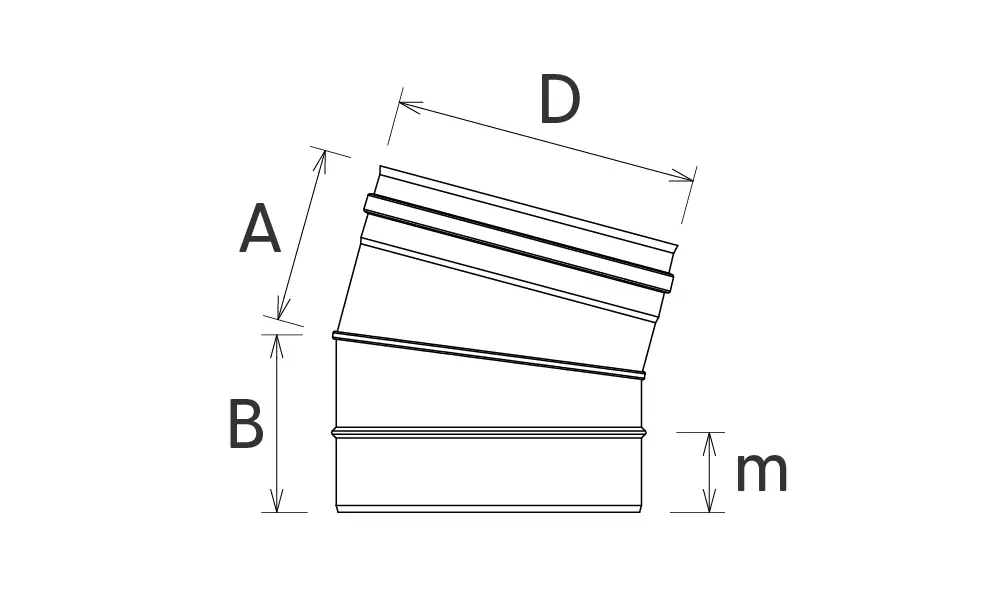
Technical Specifications
| D | 80 | 100 | 130 | 150 | 180 | 200 | 230 | 250 | 280 | 300 | 350 | 400 | 450 | 500 | 550 | 600 |
| A | 109 | 110 | 113 | 114 | 116 | 118 | 120 | 133 | 135 | 137 | 140 | 143 | 154 | 157 | 160 | 164 |
| B | 109 | 110 | 113 | 114 | 116 | 118 | 120 | 133 | 135 | 137 | 140 | 143 | 154 | 157 | 160 | 164 |
| m | 50 | 50 | 50 | 50 | 50 | 50 | 50 | 50 | 50 | 50 | 50 | 50 | 50 | 50 | 50 | 50 |
Solinox Product Catalog
Technical Module
Certificates
Installation Video
Can’t find what you’re looking for?
Contact
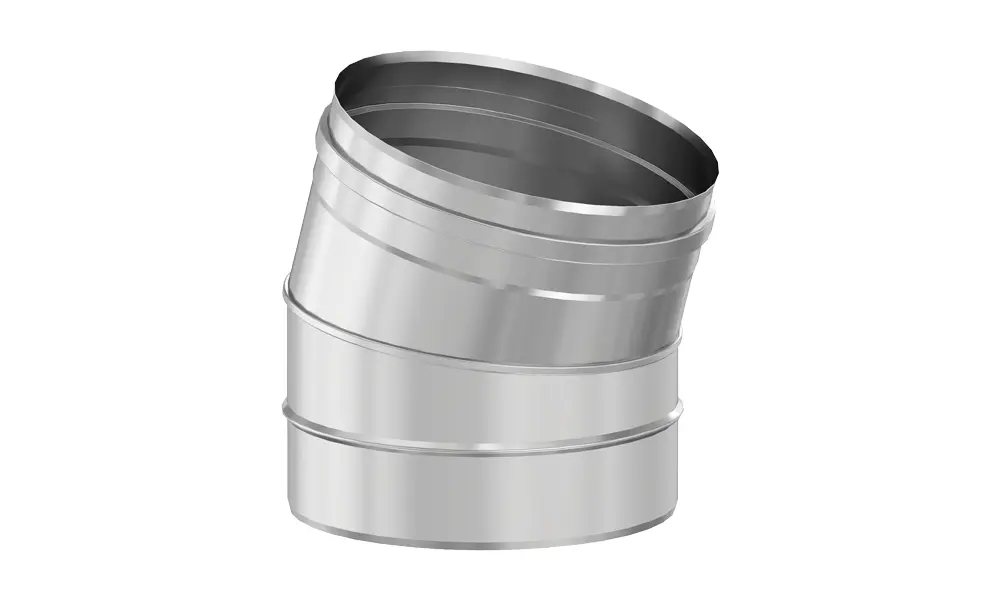
Return module used in chimney systems. 15º Elbow.
SLXD15 15 Degree Elbow for Industrial Chimney Systems
The efficiency of a high-performance chimney system depends entirely on the precision of its components. At Solinox, we provide the engineering excellence required for complex exhaust routes. The SLXD15 15 Degree Elbow is a critical component designed to facilitate subtle directional changes in industrial chimney installations without compromising laminar flow or structural integrity.
When configuring a stainless steel chimney system, maintaining optimal draft while navigating architectural obstacles is paramount. This specialized elbow offers the aerodynamic transition necessary for both residential and large-scale industrial steel chimney projects.
Technical Specifications
Solinox components are manufactured to withstand extreme thermal fluctuations and corrosive flue gases. The SLXD15 elbow is engineered with the following technical parameters:
- Material Grade: High-quality stainless steel (AISI 316L or 304 options) for maximum corrosion resistance.
- Angle Precision: Fixed 15-degree bend for accurate offset calculations in tight spaces.
- Connection Type: Advanced plug-in coupling system ensuring a gas-tight and moisture-resistant seal.
- Compatibility: Designed for seamless integration with both single wall chimney and double wall insulated systems.
- Insulation: High-density mineral wool (for double-wall variants) to maintain external surface temperatures and internal flue heat.
What is a 15 Degree Elbow in a Chimney System?
In the context of an industrial chimney, a 15-degree elbow is a directional fitting used to create a “jog” or offset in the vertical or horizontal run of the flue pipe. Unlike sharper 45 or 90-degree bends, the 15-degree elbow minimizes friction loss and turbulence. This is vital for maintaining the calculated natural draft of the chimney system. Engineers specify 15-degree offsets when the chimney must bypass structural beams or plumbing without significantly increasing the backpressure on the heating appliance or boiler.
The Solinox Advantage in Industrial Steel Chimney Design
Choosing Solinox means investing in longevity and safety. Our chimney systems are recognized globally for their ease of installation and compliance with rigorous international safety standards.
Optimized Fluid Dynamics
The internal surface of the SLXD15 elbow is finished to reduce soot accumulation. By providing a smooth transition, the elbow ensures that exhaust gases exit the industrial chimney at the intended velocity, reducing the risk of condensation and creosote buildup.
Precision Engineering
Our manufacturing process utilizes laser welding technology, ensuring that every joint in the chimney system is a point of strength rather than a point of failure. This precision is what allows Solinox to be a preferred partner for engineers designing complex industrial chimney layouts.
Versatile Application
Whether you are installing a single wall chimney for an indoor renovation or a robust steel chimney system for a factory, the SLXD15 provides the flexibility required for professional-grade results. It is particularly effective in pellet stove pipe configurations and high-efficiency gas boiler exhausts where precise venting is mandatory.
Installation and Maintenance
For optimal performance, it is recommended that 15-degree elbows be used in pairs to create a smooth offset. When integrated into a Solinox chimney system, these components require minimal maintenance. Periodic inspections should focus on the integrity of the connection points and ensuring no external debris has compromised the industrial chimney flue.