
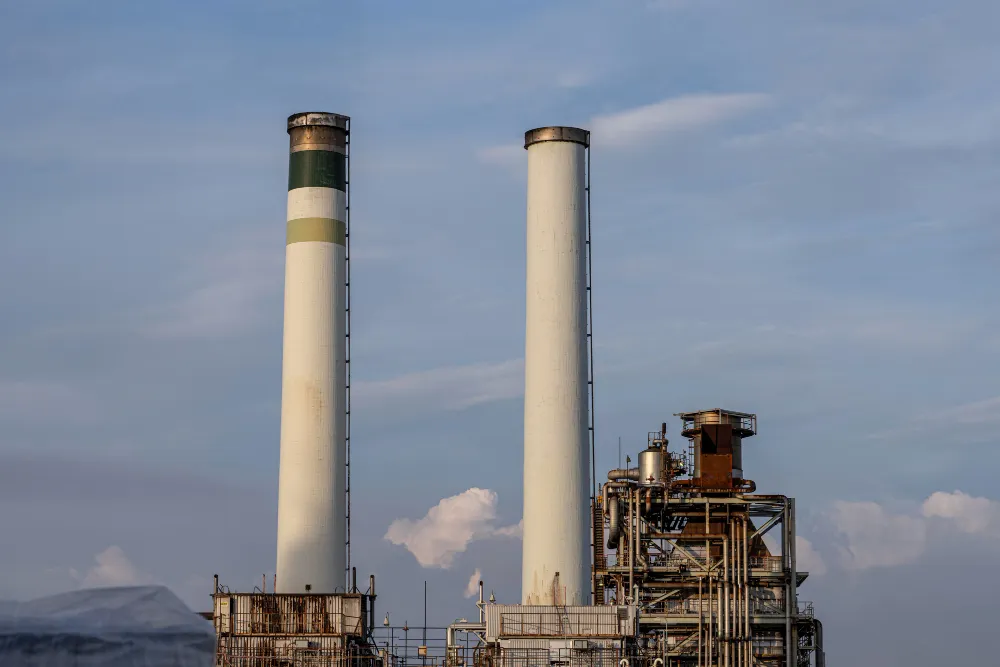
An industrial chimney is a highly engineered structure designed to transport combustion gases from a furnace, boiler, or engine to the outside atmosphere. Far from being a simple exhaust pipe, a modern steel chimney system operates on specific thermodynamic principles to ensure that gas is moved efficiently while protecting the structural integrity of the facility.
The Principle of Thermal Buoyancy: The Stack Effect
The primary mechanism that makes an industrial chimney function is the “stack effect.” This is a physical phenomenon driven by the difference in density between the hot gases inside the chimney and the cooler ambient air outside.
- Pressure Differential: Hot gases are less dense than cold air. This creates a natural upward pressure, causing the flue gas to rise through the vertical stack.
- Draft Generation: As the hot air rises, it creates a vacuum (suction) at the base of the chimney, which pulls fresh air into the combustion chamber to sustain the fire.
- Height Correlation: The taller the industrial steel chimney, the greater the pressure difference and the stronger the draft. This is why high-capacity power plants require exceptionally tall structures.
Structural Engineering and the Solinox Advantage
For an industrial steel chimney to function reliably, it must maintain a stable internal temperature. This is where the choice of system becomes critical to the engineering process.
- Heat Retention: A double skin chimney is the preferred choice for industrial applications. By placing high-grade insulation between two layers of stainless steel, the system prevents the flue gases from cooling down too quickly.
- Condensation Prevention: If gases cool below their dew point, they turn into corrosive liquids. Stainless steel chimney systems are designed to keep the inner wall hot, ensuring that sulfur and other combustion byproducts remain in a gaseous state until they exit the stack.
- Thermal Expansion: As the steel heats up, it expands. Professional solinox chimney systems incorporate specialized components and expansion joints to allow the metal to grow and shrink without warping the structure.
Critical Components in an Industrial Steel Chimney
The efficiency of a chimney is not just about the vertical pipe; it is about how the entire system is integrated into the building’s architecture.
- Precision Routing: When the exhaust path must change direction, a chimney elbow is used. In industrial settings, these elbows must be aerodynamically optimized to prevent turbulence, which can kill the natural draft.
- Structural Support: For chimneys mounted against a building, a double curtain wall system may be used for the facade. The chimney is secured using heavy-duty wall stabilization brackets to manage wind loads and vibrations.
- Terminal Protection: At the very top, a steel chimney system often features a specialized termination. A chimney cap or a rain shield protects the insulation and the inner flue from moisture, which is the leading cause of internal corrosion.
Why Industry Prefers Stainless Steel Chimney Systems
While masonry was the standard for centuries, the modern industrial steel chimney has taken over for several technical reasons:
- Low Thermal Mass: Steel heats up much faster than brick, meaning the chimney reaches its optimal draft capacity almost immediately after the boiler starts.
- Corrosion Resistance: Modern industrial processes often produce aggressive chemical exhausts. High-grade stainless steel can withstand these substances for decades.
- Lightweight Construction: Steel systems are significantly lighter than masonry, allowing them to be installed on rooftops or attached to exterior walls without the need for massive concrete foundations.
- Versatility: From a specialized pellet stove pipe for a small commercial heater to a massive multi-flue industrial stack, steel systems offer a modularity that traditional construction cannot match.
In summary, an industrial chimney is a dynamic component of a building’s energy system. By leveraging the laws of physics and the durability of high-grade steel, these structures ensure that industrial operations remain safe, efficient, and compliant with environmental regulations.