
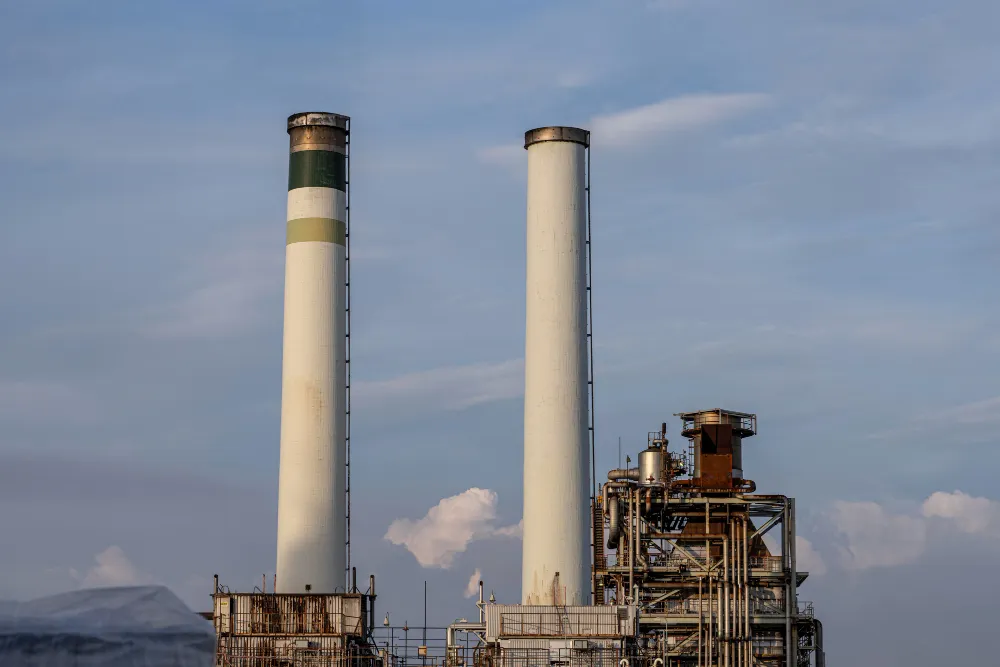
An industrial chimney is an engineered system designed to safely discharge combustion gases from boilers, furnaces, engines, and other industrial equipment into the atmosphere. Its height, diameter, material, and insulation are selected according to the operating conditions of the facility.
How Does an Industrial Chimney Create Draft?
The main principle behind an industrial chimney is the stack effect. Hot combustion gases are less dense than cooler outside air, so they naturally rise through the chimney. This creates a pressure difference that helps move the gases upward and out of the system.
Chimney height, gas temperature, diameter, and outside temperature can all affect the strength of the draft.
What Are the Main Components of an Industrial Chimney?
An industrial chimney system includes flue sections, elbows, support brackets, insulation, and termination components. Together, these parts help transport exhaust gases safely while providing structural stability.
In double-wall systems, insulation between the inner and outer walls helps reduce heat loss and maintain the temperature of the flue gases.
Why Is Insulation Important?
As combustion gases travel through a chimney, they can lose heat and create condensation. Depending on the fuel, this condensation may contain corrosive substances.
A double wall chimney helps reduce heat loss and keeps flue gases warmer, lowering the risk of condensation and corrosion.
Why Is Stainless Steel Used for Industrial Chimneys?
Stainless steel is commonly preferred for industrial chimney systems because of its resistance to heat, moisture, and corrosion. It also offers a lightweight and modular solution for different industrial applications.
The appropriate stainless steel grade should be selected according to the fuel type, exhaust temperature, and chemical characteristics of the gases.
Where Are Industrial Chimneys Used?
An industrial chimney can be used in factories, boiler rooms, power facilities, industrial furnaces, heating systems, and other facilities that need to discharge combustion or process gases safely.
The design of the chimney varies depending on the equipment, exhaust characteristics, installation conditions, and required airflow.
Why Is Proper Industrial Chimney Design Important?
An industrial chimney must be designed to handle both airflow and structural requirements. Factors such as chimney height, diameter, wind loads, thermal expansion, insulation, and material selection should be considered during the design process.
A properly designed system helps transport exhaust gases efficiently while supporting the safety and long-term performance of the facility.
What is an industrial chimney?
An industrial chimney is a vertical exhaust system used to discharge combustion or process gases from industrial equipment into the atmosphere.
How does an industrial chimney work?
It uses the stack effect created by the difference between the temperature and density of hot flue gases and cooler outside air.
Why are stainless steel industrial chimneys used?
Stainless steel provides resistance to heat and corrosion while offering a lightweight and modular solution for many industrial applications.
An industrial chimney is more than a simple exhaust pipe. Its performance depends on proper design, material selection, insulation, airflow, and structural support. Stainless steel and double-wall chimney systems can provide reliable solutions for different industrial applications when designed according to the specific requirements of the facility.
For industrial chimney and stainless steel chimney solutions, Solinox offers systems designed for different industrial applications.